Link to article
Going Pro: So You Want to Be a Nanobrewer
Your friends are drinking your homebrew faster than you can make it, and you’ve been toying with the idea of starting to brew professionally. Here’s a primer to get you started.
Peruse pairings, learn how to make beer, cider, mead, kombucha, and other alternative fermentations, get DIY tutorials, and much more in our archives.
Your friends are drinking your homebrew faster than you can make it, and you’ve been toying with the idea of starting to brew professionally. Here’s a primer to get you started.
The clock and the calendar inexorably march us to a beer serving D-Day and, if you’re like me, sometimes you wake up, realizing your party lurches near and you’re short of beer.
Zymurgy readers share their homebuilt homebrewing tools for solving problems and making the brew day go just a little more smoothly.
The results are in! Each of the past 10 years, we’ve asked Zymurgy readers to vote for up to 20 of their favorite beers. Which beer took the crown in 2012?
In this excerpt from the upcoming book IPA, the brewmaster of Stone Brewing Co. provides a look at hop varieties, products, and hopping techniques for a delicious IPA.
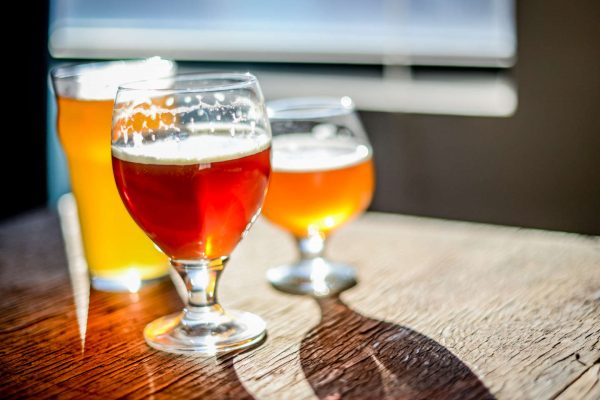
India pale ale is consistently evolving, offering a myriad of hoppy choices. Red, double black, and white IPA are the newest variations of the style.
A mountain guide on the world’s highest peaks sets out to pursue a goal he wasn’t sure was attainable: to brew a batch of beer at base camp of Mt. Everest.
Over the past decade, homebrewers and professional brewers alike have been lured by the distinct characteristics that Brettanomyces yeast can impart through fermentation.
Brewing with alternative grains presents a challenge for homebrewers used to brewing with barley and wheat, but gluten-free beer has come a long way in terms of flavor.
The thought process behind designing a recipe can help ensure that the combination of ingredients you use produces an outstanding beer. A recipe is a road map for brewing.
Share Post