Oregon-based Deschutes Brewery knows a thing or two about brewing a great stout. Their flagship stout, Obsidian Stout, has earned medals in past years of the Great American Beer Festival® along with…
Before you start cutting into that sanke keg to create a mash tun, we need to talk about an issue that is negatively affecting breweries across the country: keg repatriation—more specifically the lack thereof. The Problem Many breweries package and distribute their beers…
Originally published in the March/April 2015 issue of Zymurgy magazine. [Editor's Note: The following is an excerpt from Malt: A Practical Guide from Field to Brewhouse by John Mallett, published by Brewers Publications in 2014.] Like stock creates the base of every…
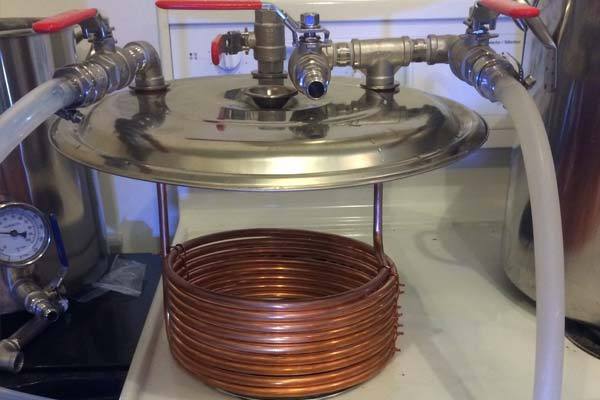
Many homebrewers desire a brew system that does it all. We want more control over temperature, efficiency and the consistency of our brews. One solution is a HERMS system (Heat Exchange Recirculating Mash System) - an advanced set up that requires some level of…
Nearly 10 years ago, Michael Tonsmeire brewed his first batch of beer in a student-taught class at Carnegie Mellon University. Now, he's written American Sour Beers, has a cult following on his blog, The Mad Fermentationist and consults for Modern Times Brewery in…
In the March/April 2015 issue of Zymurgy magazine, John Mallett discusses the importance malt plays in the production of beer and his newly published book, Malt: A Practical Guide from Field to Brewhouse. In Mallett's book, a…
Imagine having a personalized bar at home complete with draft system, LED lights, a chalk board, stained wood and a tiled counter top. People will be begging to come to your house not just because you make great beer, but you offer an experience few…
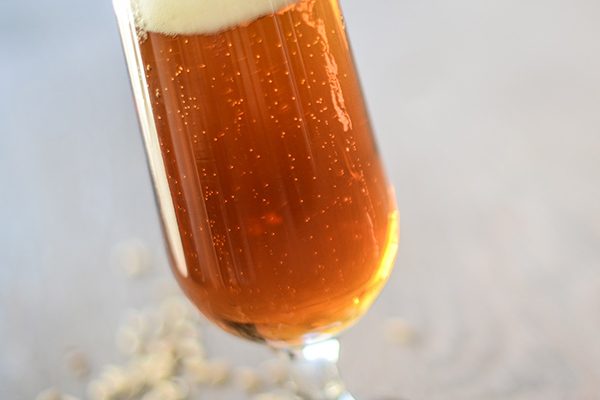
John Watson of Southbury, Conn., took home the gold in the 2008 National Homebrew Competition Fruit Beer category for his Berliner Weisse with sour cherries, ironically called "It's All Mine So Keep Back."
The Berliner Weisse is sharply sour with a clean acidicity, and the five pounds of sour cherries in this batch give this beer a crisp, light tartness. With judge feedback like "Great Job!" and "Nice Berliner Weisse!" you'll want to keep a close eye on this beer when you have company around.
This website uses cookies to enhance user experience and to analyze performance and traffic on our website. Not consenting or withdrawing consent may adversely affect certain features and functions.
Functional
Always active
The technical storage or access is strictly necessary for the legitimate purpose of enabling the use of a specific service explicitly requested by the subscriber or user, or for the sole purpose of carrying out the transmission of a communication over an electronic communications network.
Preferences
The technical storage or access is necessary for the legitimate purpose of storing preferences that are not requested by the subscriber or user.
Statistics
The technical storage or access that is used exclusively for statistical purposes.The technical storage or access that is used exclusively for anonymous statistical purposes. Without a subpoena, voluntary compliance on the part of your Internet Service Provider, or additional records from a third party, information stored or retrieved for this purpose alone cannot usually be used to identify you.
Marketing
The technical storage or access is required to create user profiles to send advertising, or to track the user on a website or across several websites for similar marketing purposes.





Share Post